The problem
Why does one workforce decision take three tools, two teams, and a week?
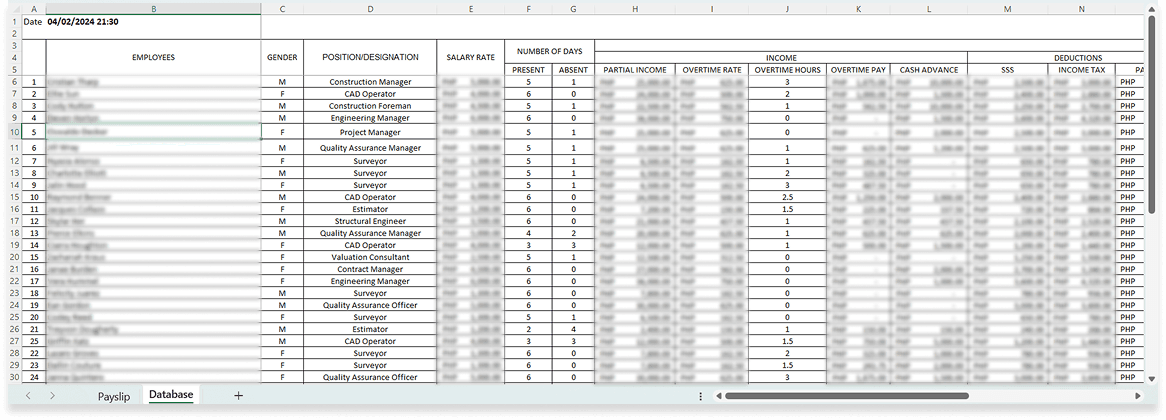
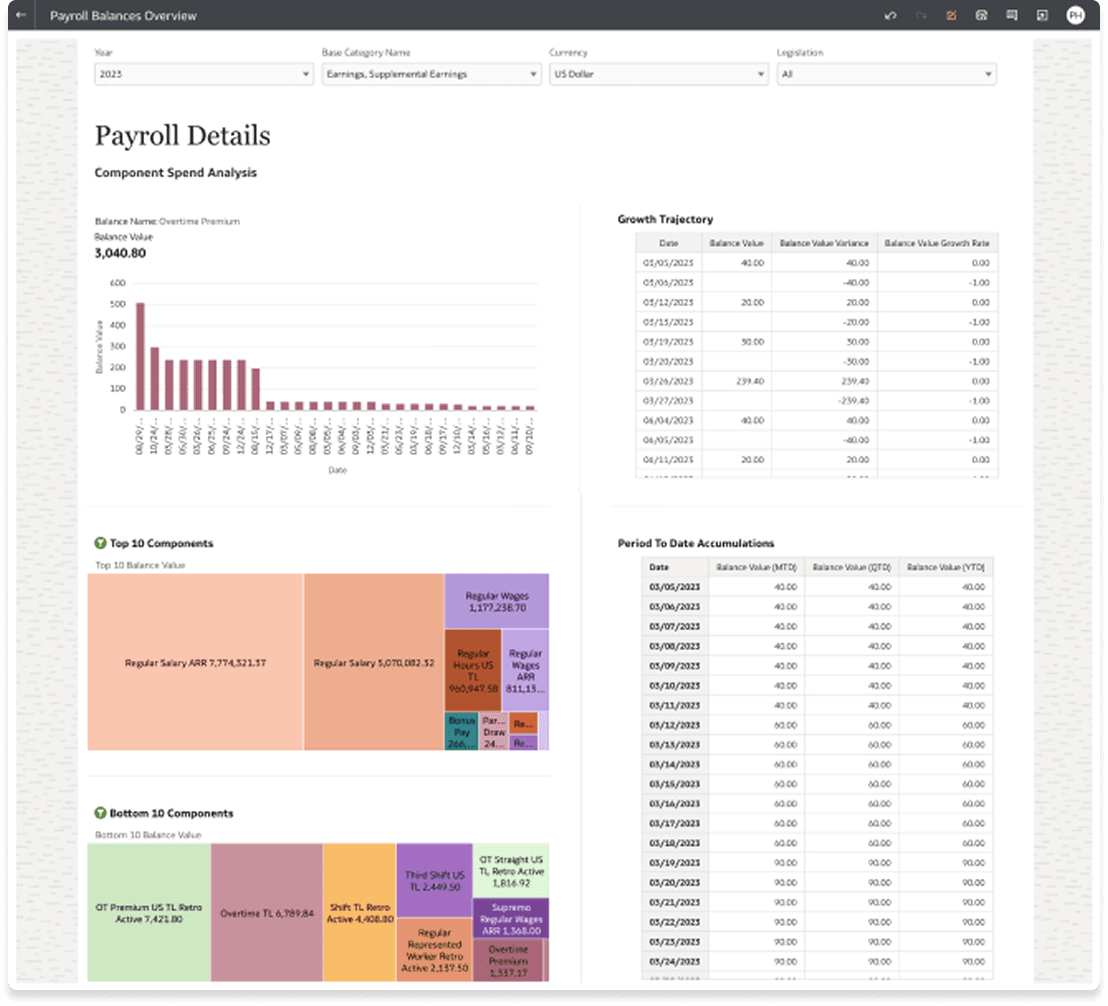
Multiple, separate sources of information, and a reliance on specialized teams to source the data. Meanwhile, Fusion data from the HR applications wasn't being leveraged for analysis where leaders needed it.
The strategy
One flow, from anomaly to action.
Instead of three tools and two teams, one application that detects the anomaly, explains what's behind it, proposes plans, and lets leaders tune one into action, right where they already work.
1 · Surface
Insights appear where the work already happens.
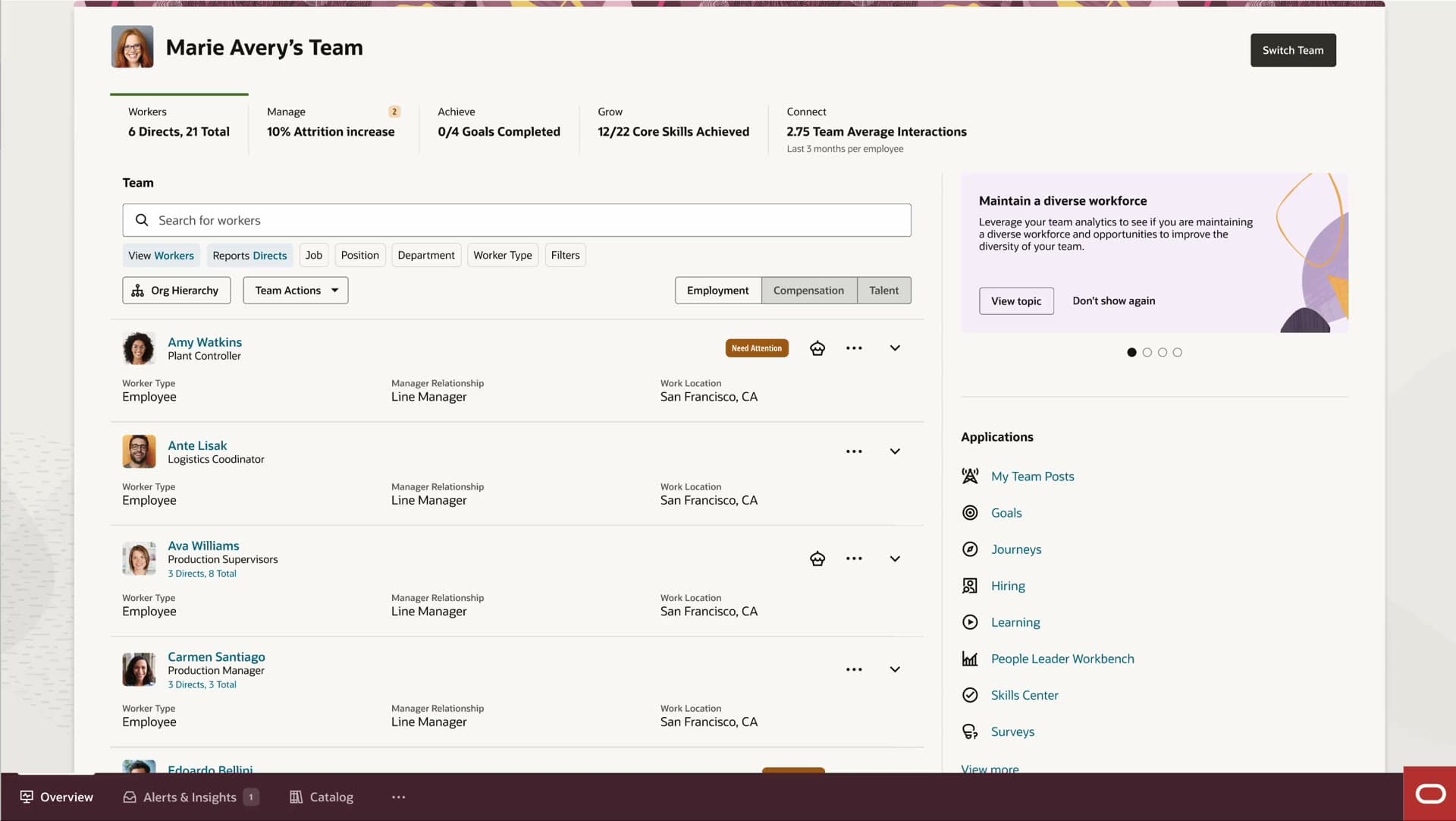
Anomaly detection flags workforce issues (attrition spikes, spend overruns, headcount gaps) right on the team dashboard leaders already use. No export, no ticket to a data team.
2 · Explain
What the insight means, and what's causing it.
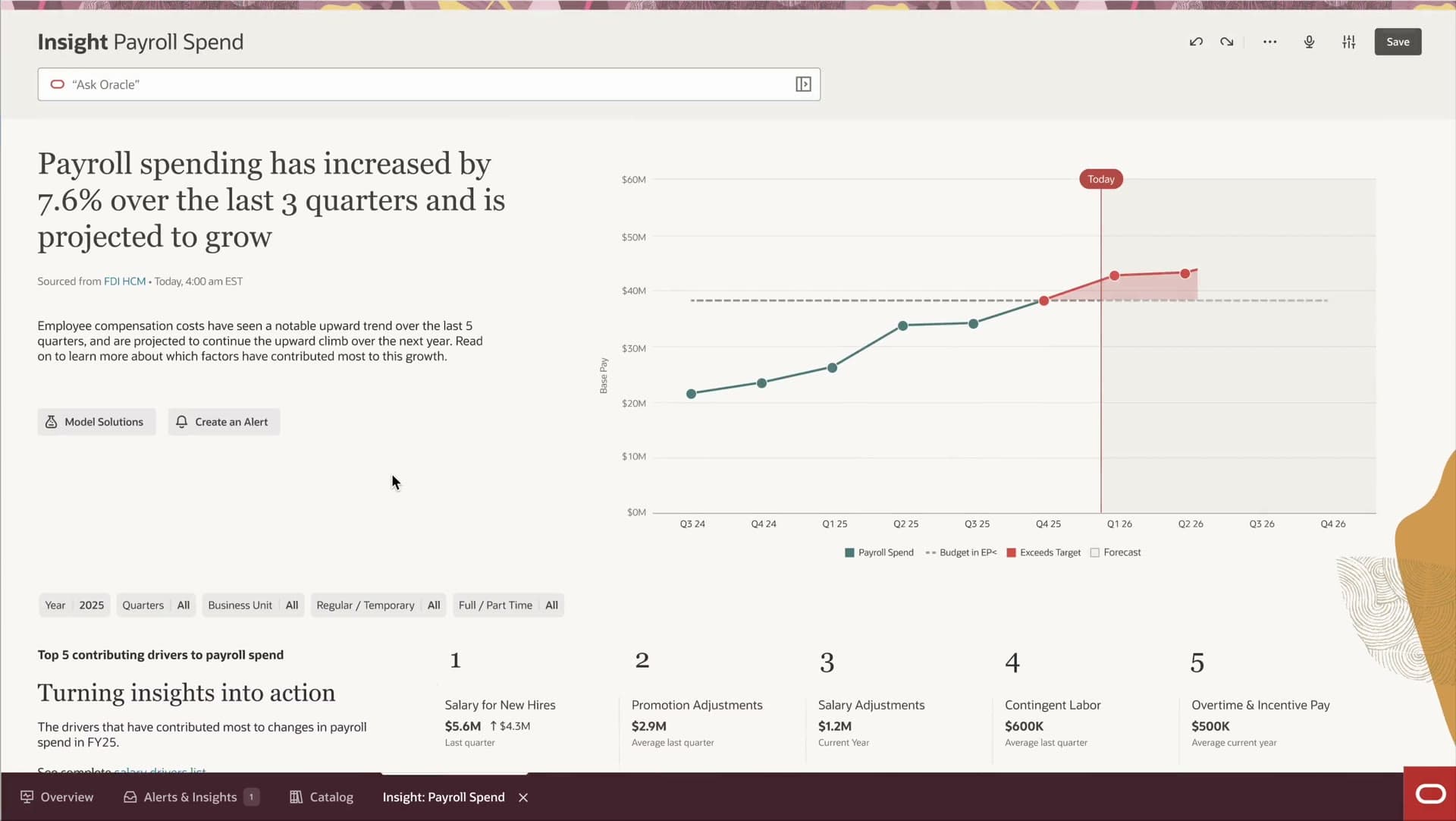
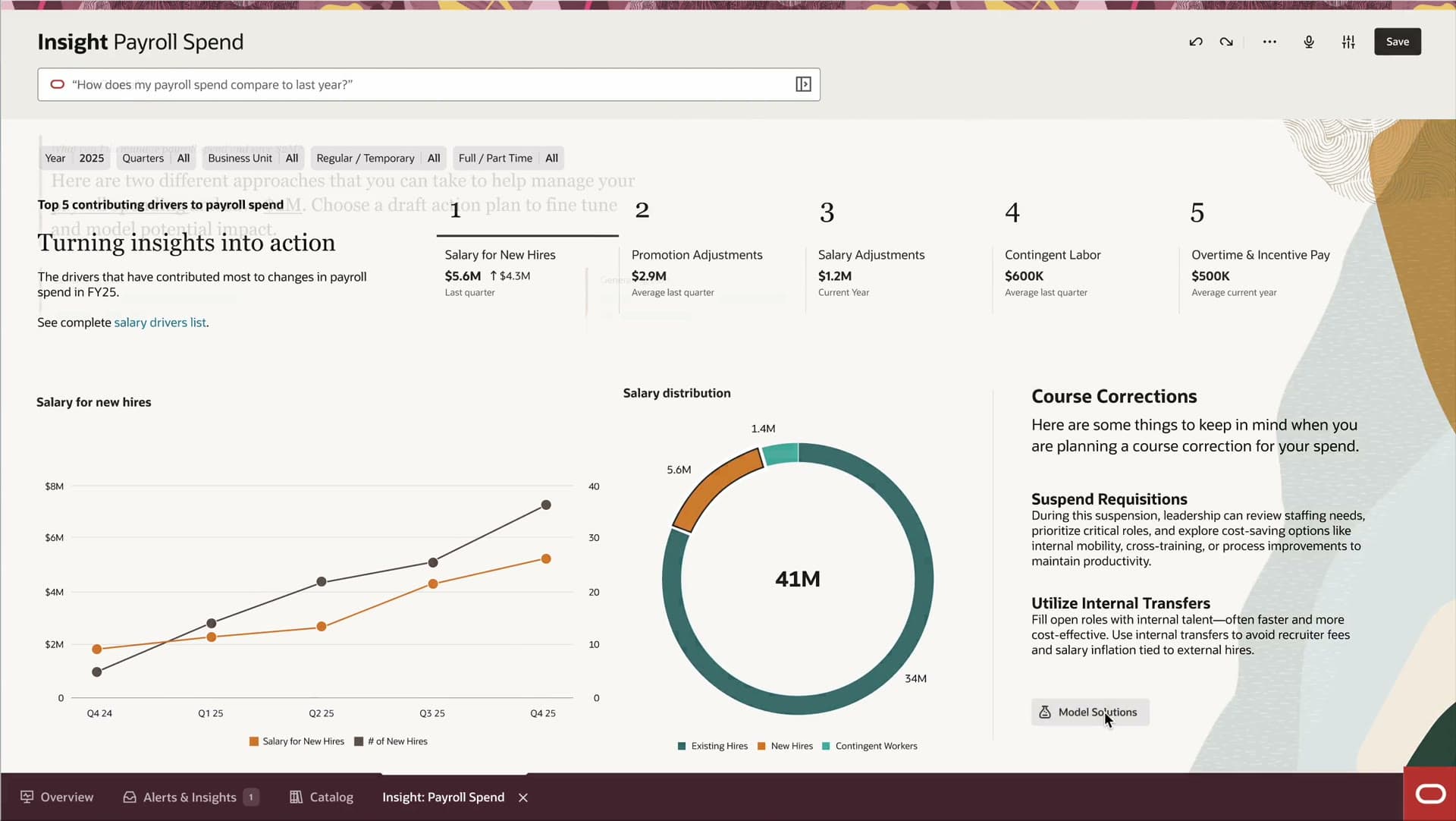
Leaders drill into root causes across their team's data (here, payroll spend up 7.6% over three quarters, and the drivers behind it) without a data analyst or a separate tool.
3 · Plan
See the plans Oracle's intelligence proposes.
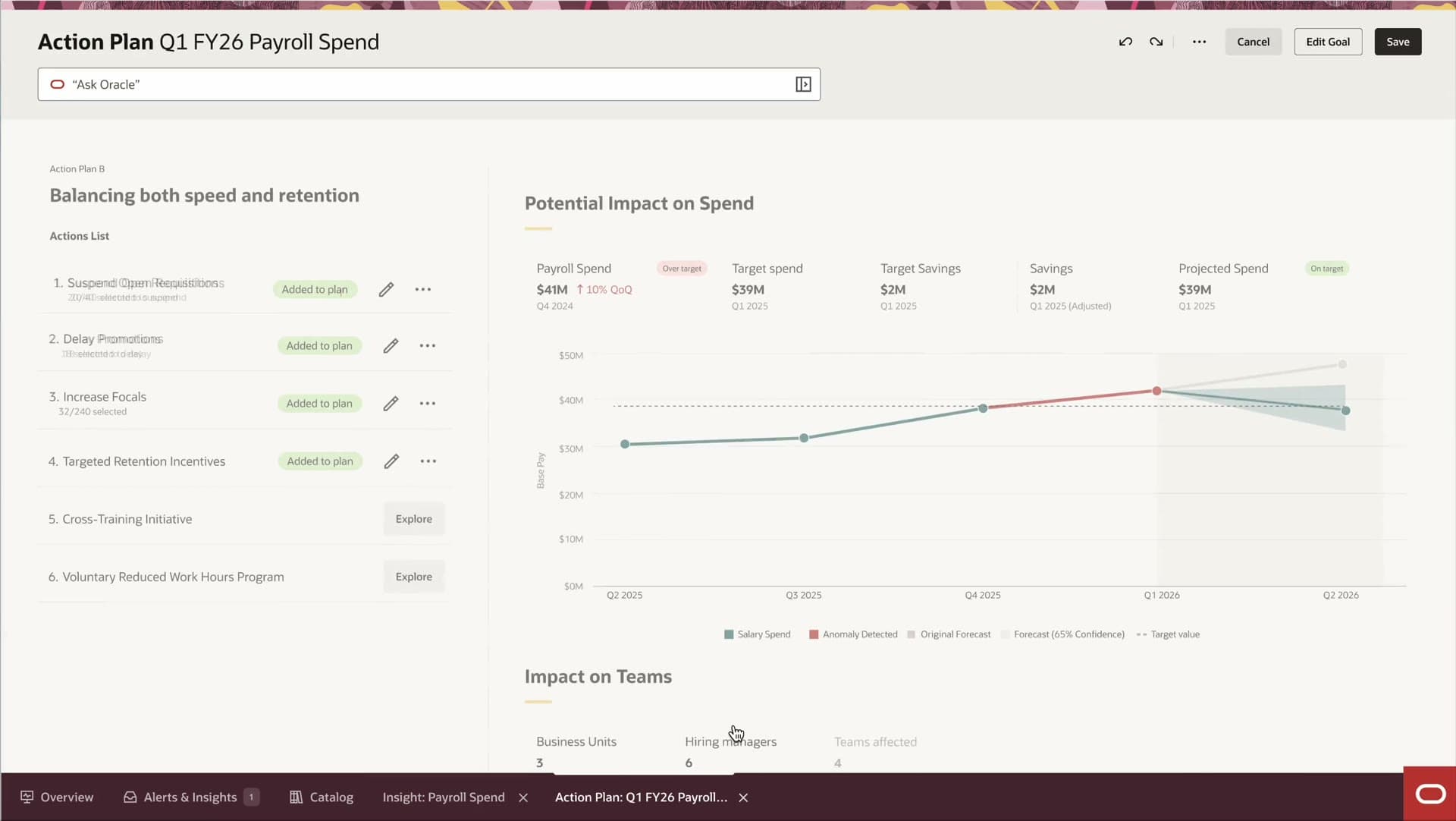
This is where my primary focus began. From the data, AI generates action plans ranked against the leader's own goals: a starting position, not a blank canvas. Leaders scan before they commit, so the options come first, at a glance.
4 · Fine-tune & act
Adjust until the plan meets the need, with the fewest trade-offs.
Every action opens into its details. Leaders tune its variables and watch the impact on spend and on teams recalculate, down to the named people affected, then commit the plan.
The outcome
Shipped on schedule, and set the direction.
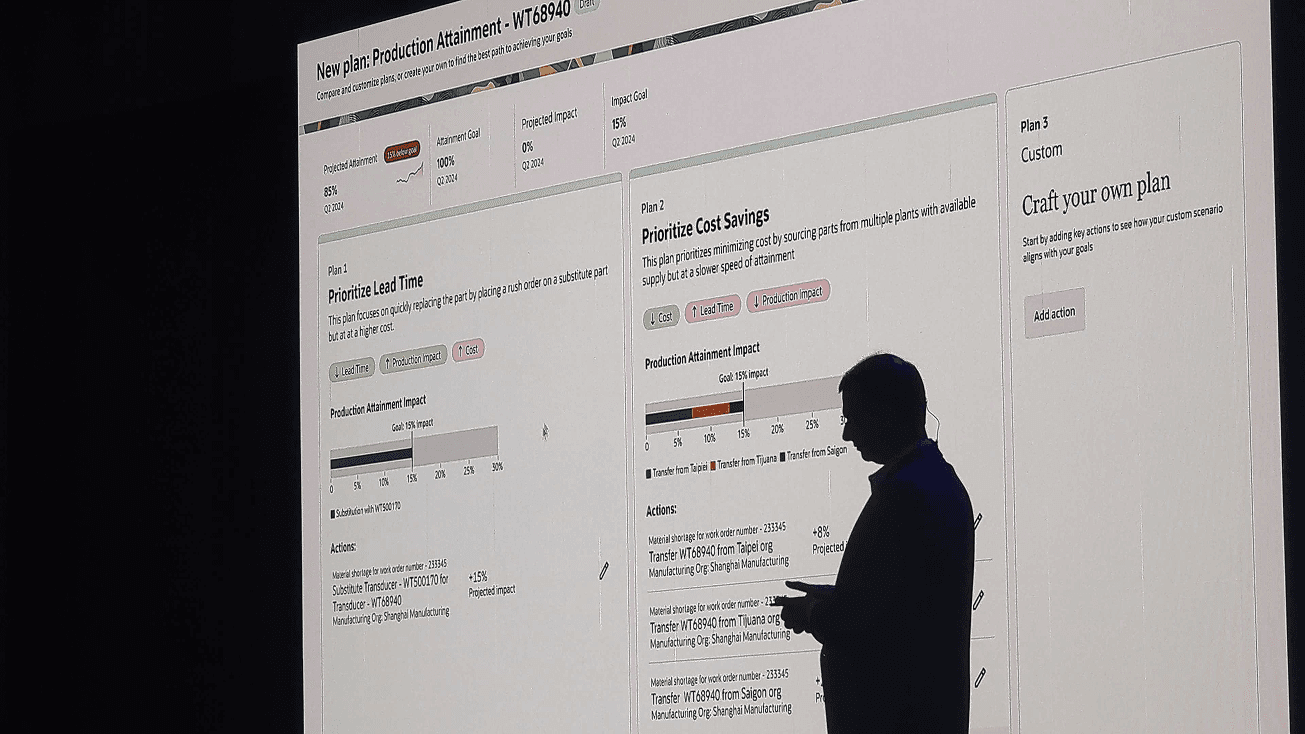
The Limited Availability app shipped on schedule for Oracle CloudWorld 2024, the first analytics experience fully built on Redwood. The next-gen vision was demoed at the keynote, and the modeling patterns were reused across verticals for similar workforce-planning use cases.